
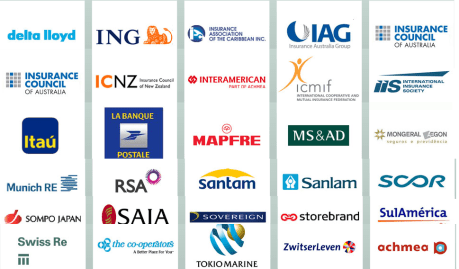
 UNEP’s Finance Initiative today launched the Principles for Sustainable Insurance on the eve of the Rio+20 Conference. The launch marks the start of the UNEP FI Principles for Sustainable Insurance Initiative (the ‘PSI Initiative’) to promote the adoption and implementation of the Principles globally.
“The Principles will serve as the global framework for insurance companies to better manage environmental, social and governance risks and opportunities in their core business strategies and operations. They include concrete actions to enhance risk management and underwriting practices, stimulate innovative insurance solutions, and catalyze industry action on a range of sustainability issues such as natural catastrophe risks, climate change, ecosystem degradation, ageing populations and emerging health risks”
The 4 Principles are:
- We will embed in our decision-making environmental, social and governance issues relevant to our insurance business
- We will work together with our clients and business partners to raise awareness of environmental, social and governance issues, manage risk and develop solutions
- We will work together with governments, regulators and other key stakeholders to promote widespread action across society on environmental, social and governance issues
- We will demonstrate accountability and transparency in regularly disclosing publicly our progress in implementing the Principles
A dedicated website http://www.unepfi.org/psi/ has been developed that details out these principles.
A total of 27 leading insurance companies from around the world with a worth of over USD 5 trillion in assets and 10% of the global premium volume, have joined hands to promote the green sector and provide insurance tools for risk management in support of environmental, social and economic sustainability.
Apparently, none of those insurers are Indian, or Chinese, where world’s largest populations reside, though these companies do operate in them. 5 of the companies are from Netherlands, 4 from Brazil, 3 from Japan, 3 from France, 2 from UK, and 1 each from Australia, Greece, Spain, Germany, New Zealand, Norway, Switzerland and Canada.
Get the complete list here
It’s a great effort that took 3 years of research studies from 2006 to 2009 focusing on the risks and opportunities associated with ESG issues in the insurance business. But here is where it looses its force – These are not legally binding and are purely voluntary and aspirational.
You can voluntarily come in and when the going seems to get tough, you can voluntarily walk out, no questions asked…
While the 27 signatory companies have shown certain degree of commitment, why can’t they be made legally binding leaving no room for any “unintended consequences”- are they so hard?
Related reads on Rio+20 in this blog:
- “Inclusive Wealth Report 2012″ launched at Rio+20
- Entering Rio+20 with vague Rio principles will give vague results
- Twenty years later, will world make good on Rio Earth Summit’s ‘broken promises’? – msnbc.com (worldnews.msnbc.msn.com)



 Linking Sustainability
Leave a reply to How to develop an EMS (environment management system)? | Linking Sustainability Blog Cancel reply