The Rio Declaration of 1992 laid down 27 principles pertaining to environment and development. Here are 10 of those 27 principles along with what I think are the reasons for not making an impact in the countries, societies and people of the world at large:
- Human beings are at the centre of concerns for sustainable development (quite philosophical, isn’t it?)
- States have the sovereign right to exploit their own resources pursuant to their own environmental and developmental policies, and the responsibility to ensure that activities within their jurisdiction or control do not cause damage to the environment of other States (contradictory – this actually gives the right to do more harm!)
- States shall respect international law providing protection for the environment in times of armed conflict and cooperate in its further development (assumes wars will occur or will be made to occur…no principle to stop the war in the first place)
- Eradicating poverty is an indispensable requirement for sustainable development (a practical measurable goal, but its just that – how do you lift billions out of poverty without increased stress on resources?)
- The least developed and those most environmentally vulnerable countries shall be given special priority (of what kind)
- States should reduce and eliminate unsustainable patterns of production and consumption (how do you do that…especially in the light of increased consumption levels by the emerging economies?)
- States shall enact effective environmental legislation (in fact, the easiest of all to implement, and it remains there)
- The precautionary approach shall be widely applied by States according to their capabilities (a sensible agenda, but how do you know its adoption rate?)
- Women have a vital role in environmental management and development (synchs with women’s rights, not with environmental goals)
- The creativity, ideals and courage of the youth of the world should be mobilized to forge a global partnership (alas the creativity, ideals and courage of the youth is either geared towards creating the likes of Twitters, Facebooks, Pinterests or busy fighting for their freedoms from the tyrannical regimes)
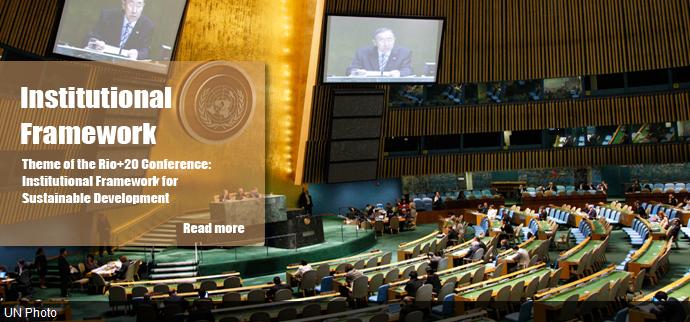
In June 2012, i.e., 3 months from now, Rio +20 Summit will be happening at Rio de Janerio, Brazil to secure renewed political commitment for sustainable development, assess the progress to date, and address new and emerging challenges.
7 critical issues related to Jobs, Energy, Cities, Food, Water, Oceans, and Disasters will be discussed along with the focus on two main themes of a green economy (in the context of sustainable development and poverty eradication) and the institutional framework for sustainable development.
While we do hope some fixing of the problems, but the “Girl who silenced the world” 20 years ago was right on spot when she talked about ozone layer holes, pollution, the devastation of the forests and extinction of species as she urged the world leaders to change their ways. “If you don’t know how to fix it, stop breaking it,” she had said. She was none other than the then 12 year old Severn Cullis-Suzuki, daughter of the famed environmentalist David Suzuki.
The future is here again. Again some youth will speak to the current set of world leaders in June this year and urge to speed up their progress.
While many businesses have already demonstrated that sustainability can be integrated into business thinking and low-carbon solutions can be reached unilaterally via various codes and standards like the GRI reporting, ISO14001, OECD guidelines etc, and the concept has been incorporated in many UN declarations, it is the complex intermix of implementing all the 3 pillars of economic, social and environmental dimensions and the vagueness of the principles that drives the Rio+20 agenda and its continued unsatisfactory results.
(Image credit: http://www.uncsd2012.org/rio20/index.html)
Related articles
- India Needs Green Muscle at Rio+20 (chimalaya.org)
- Why Rio+20 must not leave politics out of sustainable development | Melissa Leach (guardian.co.uk)
- Rio+20 and The Future We Want (oneplanetsustainability.wordpress.com)
Resources:
The ICC Green Economy Task Force and the Business Action for Sustainable Development (BASD) 2012 are the leading vehicles through which ICC (International Chamber of Commerce) is initiating its agenda.



 Linking Sustainability
Leave a reply to Pankaj Arora Cancel reply