
How much good is good enough?
The philosophy of doing good by doing well still seem all too altruistic for many companies around the world. Today, not even a single business can be said to be a truly sustainable business.
Even companies like Patagonia, Stonyfield farm, Interface Global, or Starbucks who have been at the forefront of implementing sustainability principles do harm – the only right thing they do is to be transparent to all its stakeholders about it and are trying honestly to move towards building a Sustainable Enterprise.
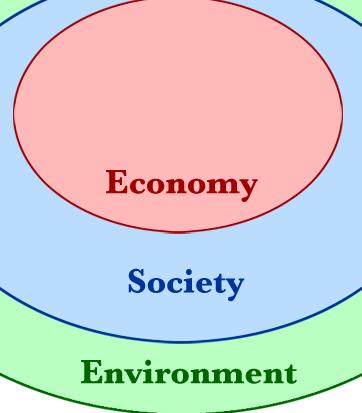
Sustainability does not live in silo
There’s not an overnight quick-fix silver bullet answer to the unsustainability of business – pollution, hazardous substances, fossil fuels etc. Companies do struggle to align their business objectives with forming their own standards and improving on them as they move along their sustainability path.
Sometimes, it becomes a kind of oxymoron when companies in the chemical, mining, fast food and other sectors proclaim to be on the path to being a sustainable business, when the inherent nature of the business is wreaking havoc to planet and people’s health.
Also read 4 Effective Strategy Framework for Sustainable Innovation
Ironically, it is the business that can undo the damage done by it self.
So, the philosophical structure of Sustainability that will emerge after the dust settles will be one not of a separate silo but an integral quality of the organization – of its processes and its products, along with being both ethical and responsbile.
Here are the 9 essential principles used for building a Sustainable Enterprise:
- Suppliers, consumers and the important stakeholders such as NGO’s and environmental groups are increasingly being considered as whole systems part of the enterprise.
- Increased transparency of the processes and materials by the companies via self regulation or via GRI compliant sustainability reporting.
- Moving with product innovation and operational efficiency
- Working at the beginning of pipe solutions rather than end of pipe solutions
- Incorporating end-of-life at the beginning of the product design
- Complete life cycle analysis along the supply value chain
- Move towards renewable energy through solar and wind power
- Reducing waste and emissions to reach a cradle-cradle manufacturing system
- Working in the communities where the companies operate.
Having said this, while some companies are making genuine efforts, others just want to appear green in its stakeholder’s eyes, exploiting the gap that exists in the green space.
But in the long term, these Sustainable Business Development principles will have to be adopted by the businesses who want to stay in the business or else they will see themselves being shunted out of the marketplace.
Related articles
- 6 immediate benefits of a Sustainability program (linkingsustainability.com)
- 7 Mission Statements that inspire Sustainability (linkingsustainability.com)
- Top 5 reasons why Sustainability strategies fail (linkingsustainability.com)
- Communicating Sustainability Strategies effectively
- 4 Effective Strategy Framework for Sustainable Innovation



 Linking Sustainability
Leave a reply to jpgreenword Cancel reply