
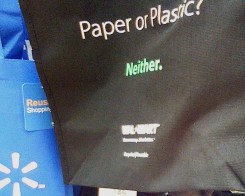
Sustainability has really come of age – akin to saying that an era of Sustainability 2.0 has begun. Companies the world over have at least agreed on one thing – climate change is real and is happening faster than expected. Bringing that change hinges on the elephants in the room – companies like Walmart. Why? Because when Walmart moves, it affects its suppliers the world over.
Here are 10 sustainability trends that we have seen evolve in the last decade due to major businesses taking the lead:
- Increase in the use of Eco-labeling and subsequent decrease in green washing
- Carbon mitigation strategies and firms driving down the concept of zero waste
- Move towards ethical and green Supply Chains many levels deep
- Energy conservation – through water and renewables
- CDM and Carbon offset markets taking firm roots
- GRI reporting on the rise – from 20 to more than 2000 in less than a decade.
- Development of metric based measurement tools
- Strict government regulations
- Taxes on carbon
- Use of renewable energy via solar and wind on the rise
There are signs all around us – from my ‘Pentel’ pen with ‘recyclogy’ written all over it, to the 6 wind turbines that have sprouted up in the last 4 years of my daily commute to work. Businesses have taken sustainability as an opportunity – as a USP over other businesses that are still contemplating over the question, what sustainability really means. So, when a company starts on the path to sustainability, it does so in a piece meal manner – in isolation.
Sustainability is a systems approach and silo thinking has to be removed. Sustainability is not a buffet – where you pick some things that you like and leave out things that you don’t like – in other words, adopt strategies that are convenient, increase the bottomline and doesn’t come in the way of growth and leave out those that are inconvenient, require culture change or upfront costs with long payback periods.
As companies become comfortable and conversant with sustainable business practices, they move from a buffet approach to a full course menu – a systems approach. The trends listed are merely an indication where the business is going and where it can lead.
Also, the trends mean that bigger players like Walmart and Coca Cola are humble enough to learn from smaller players like Patagonia. Also, it doesn’t mean that issuing a GRI report is an end in it self or using renewables is enough when you’re selling more consumption.
As, Ray Anderson, CEO of Interface Carpets likes to say – “We have gotto move from an environmental friendly sustainable company to being a environmentally restorative company – meaning, taking nothing away from earth”.
Related articles
- Can Walmart Be an Engine of Change for Sustainability? (thinkprogress.org)
- Green companies – Walmart
- Eco-Labeling Impacts
- GRI tightens its grip on OECD countries



 Linking Sustainability
Leave a reply to Elmer Stenger Cancel reply