
The challenge for business is to provide improved services and much more functional products – but in innovative ways as to drastically reduce its reliance on materials, energy, labour and waste. So, the question is “Can innovation and technology be part of the solution to reverse the global warming trend and how can companies innovate in ways that have a positive impact and generate the most value (WBCSD 2002)?
What could be the framework for responsible goal setting that will spur accountability within the system. Holliday, Schmidheiny, Watts in their book “Walking the Talk” give the solution. It’s the 4 point framework that will enable sustainable innovation:
- Provide incentives to innovate and diffuse technologies that support sustainable development
- Support long term basic research through funding
- Facilitate public-private and inter-firm collaboration
- Encourage public investment in basic science
They also advocate that a successful innovation program will only work if it is transparent, has an ongoing stakeholder dialogue, has data protection, has a global system of safety standards, benefits both developing and developed countries, has risk-benefit embedded and is responsible for external costs.
For example, Monsanto with its genetically modified (GM) seeds and organisms thought that it was the best invention and the solution to end world hunger – but this innovation was not accepted by the consumers as Monsanto, in spite of developing a breakthrough product. Why? Because it didn’t engage with the civil society at large and thought that by influencing government it would have its way.
Toyota’s Prius is a classic case study demonstrating the importance of setting targets in planning for innovation. A program that started in early 1990’s by Toyota somehow foresaw the carbon constrained world. It successfully developed the Prius in various stages – from 50% improvement to 100% fuel efficiency gains.
The hybrid technology pioneered by Toyota is now being emulated by other car manufacturers and has become a basic requirement in a vehicle.
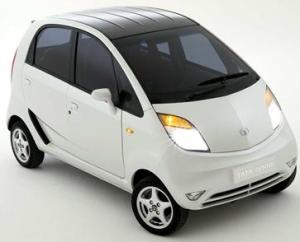 3M and P&G are some of those rare companies that have thrived on change and innovation for decades. Google and Apple are other good examples of product and process innovation. But so is Tata Nano’s $2500 car or Mohd Younis’s Micro-finance Grameen Bank. These have fundamentally reshaped the entire industry –– not exactly in the ‘people, planet, profit’ sense, but perhaps towards more sustainable business models which are having a tremendous impact on the BOP population.
As opposed to common view that government must leave businesses alone, governments are greatly influencing positive change in the business through innovative and sometimes regulated public policies.
GE’s France CEO, Clara Gaymard said in a recent lecture podcast at HEC, Paris: It is only because that governments in China, Europe and US have put regulations on wind power, have we at GE been able to sell 8 billion units as opposed to a tiny number earlier.
Experience suggests that there is no one silver bullet that will enable the acceptance of new innovative products in the marketplace. Innovation is not a one-off project – it is an ongoing process that enables the organizations to reinvent themselves by acting responsibly and foreseeing the market changes and delivering to those demands.
Related articles:
- Corporate Governance for Sustainability
- Why some don’t like Sustainable development?
- Engaging with those who matter
- Top 5 reasons why Sustainability strategies fail
- 6 immediate benefits of a Sustainability program
- Culture change towards sustainability



 Linking Sustainability
Leave a reply to Top 5 reasons why Sustainability strategies fail | Linking Sustainability Blog Cancel reply