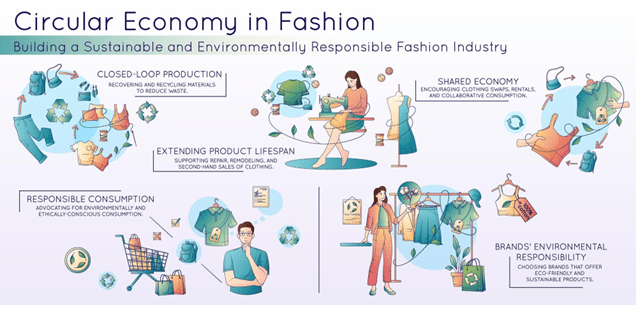
The fashion industry is one of the most polluting industries in the world, with fast fashion contributing significantly to textile waste, water pollution, and carbon emissions.
In response, few companies are pioneering efforts to slow down fast fashion and transition toward a circular economy. From government policies to innovative business models, India is becoming a hub for sustainable fashion initiatives.
Here’s how different stakeholders in the Indian fashion industry are driving change.
1. Government Regulations & Policies
Extended Producer Responsibility (EPR) for Textiles
The Indian government, through the Central Pollution Control Board (CPCB), is drafting Extended Producer Responsibility (EPR) rules for textiles. These regulations will require fashion brands to take responsibility for the entire lifecycle of their products, including collection, recycling, and safe disposal.
- Raymond Ltd. has started ‘Recron GreenGold’, a sustainable fabric initiative that involves recycling PET bottles into polyester yarn for clothing. As of 2023, Raymond has recycled over 1 billion PET bottles into textiles.
- Arvind Ltd. is working closely with policymakers to implement circular economy principles in India’s textile industry by focusing on water conservation, sustainable sourcing, and textile recycling. Arvind has reduced its water consumption by 90% through its zero-liquid discharge system.
2. Business Model Shifts Toward Sustainability – Upcycled Fashion & Textile Waste Reduction
- Doodlage is a pioneering Indian fashion brand that uses discarded fabric from factories to create stylish, high-quality garments. They also have a clothing take-back program, encouraging consumers to return worn-out clothes for recycling. Doodlage saves approximately 15,000 meters of fabric from landfills annually.
- B Label by Bombay Hemp Company (BOHECO) uses hemp-based textiles, which require less water and land than cotton, making them a sustainable alternative for fashion. Hemp fabric consumes 50% less water than conventional cotton production.
Rental & Resale Platforms
- The Clothing Rental and Stage3 offer rental services for high-fashion garments, reducing demand for new clothing and extending the lifecycle of existing apparel. Clothing rental can reduce an individual’s carbon footprint by up to 30% per outfit.
- Kiabza is an online resale platform where individuals can buy and sell pre-owned branded clothes, preventing them from ending up in landfills. The resale market is expected to grow 20x faster than traditional retail by 2030.
3. Consumer Awareness & Behavioral Change
Educational Campaigns for Conscious Consumerism
- Fashion Revolution India runs the #WhoMadeMyClothes campaign to promote transparency in the supply chain and ethical fashion choices. A survey revealed that 70% of Indian consumers are now considering sustainability before making a fashion purchase.
- Eco Fashion Talk India is an online platform that educates Indian consumers about the impact of fast fashion and promotes slow, sustainable alternatives.
DIY & Upcycling Culture
- Refash is an online marketplace dedicated to upcycled fashion, where designers repurpose waste materials into trendy fashion pieces. Upcycling can reduce textile waste by up to 75% compared to traditional recycling.
- Rimagined promotes sustainable fashion by upcycling old textiles into bags, accessories, and home decor.
4. Technological Innovations Driving Circular Fashion
Textile Recycling & Circular Production
- Reverse Resources partners with Indian garment factories to track and repurpose textile waste, ensuring it goes back into production instead of landfills. Globally, less than 1% of textile waste is recycled into new fibers, highlighting the importance of such initiatives.
- Chlorohemp is developing biodegradable fabrics using hemp and banana fibers to create eco-friendly clothing options.
Blockchain for Transparency & Ethical Sourcing
- ReshaMandi, India’s first digital platform for silk and natural fibers, uses blockchain technology to ensure transparency in ethical sourcing and fair trade practices. Blockchain in fashion is expected to grow by 20% annually, improving supply chain transparency.
- Good Earth has integrated traceability technology into its supply chain to certify the sustainability of its handmade textiles.
5. Corporate Accountability & Brand Activism
Big Textile Companies
- Arvind Ltd. has implemented a closed-loop water recycling system, reducing water consumption in textile production. The company recycles 2 billion liters of water annually.
- Welspun India has committed to using 100% sustainable cotton and reducing plastic use in packaging. Welspun has reduced its greenhouse gas emissions by 31% since 2018.
Retailers Leading the Change
- Fabindia promotes organic cotton and traditional handcrafted textiles, supporting local artisans while reducing the environmental impact. Fabindia employs over 50,000 artisans across India.
- Anokhi and GoCoop work directly with weavers and artisans to ensure fair wages and sustainable production practices.
Additional Initiatives Supporting Circular Fashion in India
Textile Recycling Startups
- Worn Again India is working on chemical recycling of textiles to regenerate fibers for new clothes. Chemical recycling could save up to 90% of textile waste from landfills.
- Goonj collects old clothes and upcycles them into usable products for underprivileged communities. Goonj processes over 3,000 tons of discarded fabric every year.
Sustainable Fabric Innovation
- AltMat develops alternative textiles using agricultural waste, such as bamboo, banana, and hemp fibers. Agricultural waste-based textiles can reduce CO2 emissions by 60% compared to conventional fabrics.
- BioDye offers plant-based, chemical-free dyes to make the fashion industry less polluting. Traditional dyeing accounts for 20% of global industrial water pollution, making innovations like BioDye crucial.
Through government regulations, business innovation, consumer awareness, technological advancements, and corporate accountability, Indian brands are proving that fashion can be both stylish and sustainable.
As more companies join the movement, India has the potential to become a global leader in sustainable and circular fashion.
If you’re a consumer, you can support these efforts by choosing brands that prioritize sustainability, reusing and upcycling clothes, and being mindful of your fashion choices.
Together, we can slow down fast fashion and make the industry more responsible and ethical.


 Linking Sustainability
Comments (moderated)