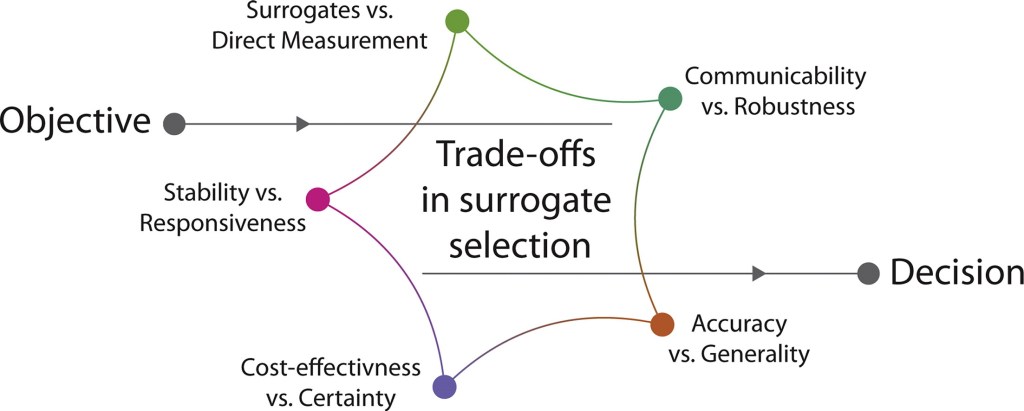
In the pursuit of sustainability and the advancement of a circular economy, organizations often rely on specific metrics to gauge progress.
However, when these metrics serve as mere proxies—surrogate metrics—they can misrepresent actual outcomes, leading to misguided strategies and unintended consequences. This article explores prevalent surrogate metrics within the sustainability and circular economy sectors. It highlights their limitations. The article also advocates for more comprehensive evaluation approaches.
Understanding Surrogate Metrics
Surrogate metrics are indirect measures used to represent complex outcomes. While they offer simplicity and ease of measurement, they may not fully capture the multifaceted nature of sustainability goals. Over-reliance on these proxies can result in a skewed perception of progress and potentially hinder genuine environmental advancements.
Common Surrogate Metrics in Sustainability and Circular Economy
1. Recycling Rates
- Surrogate Metric: High recycling percentages are often equated with effective waste management and environmental responsibility.
- True Outcome: The ultimate goal is to minimize environmental impact through waste reduction and resource conservation.
- Limitations:
- Quality vs. Quantity: High recycling rates don’t account for the quality of recycled materials. Poor-quality recycling can lead to downcycling, where materials degrade and become less useful over time.
- Energy Consumption: The recycling process itself can be energy-intensive, potentially offsetting environmental benefits.
- Actual Reuse: Not all collected recyclables are effectively reused. For instance, globally, only 9% of plastic waste is recycled, with significant portions ending up in landfills or the environment.
2. Carbon Offsets Purchased
- Surrogate Metric: The volume of carbon credits acquired by an organization is used to demonstrate commitment to carbon neutrality.
- True Outcome: Actual reduction of greenhouse gas emissions and mitigation of climate change impacts.
- Limitations:
- Effectiveness of Offsets: Many carbon offset projects have been criticized for not delivering the promised emission reductions. Investigations have revealed that a significant percentage of rainforest carbon offsets are ineffective.
- Temporary Solutions: Some offsets, like tree planting, offer temporary carbon storage and are vulnerable to risks like deforestation and wildfires.
- Potential for Greenwashing: Relying heavily on offsets can divert attention from the imperative to reduce direct emissions.
3. Biodegradable and Compostable Product Labels
- Surrogate Metric: Labeling products as “biodegradable” or “compostable” suggests they are environmentally friendly and will break down harmlessly.
- True Outcome: Products should decompose efficiently without leaving harmful residues, contributing positively to waste management systems.
- Limitations:
- Misleading Claims: The terms “biodegradable” and “compostable” are often used loosely, leading to consumer confusion. Some products labeled as such do not meet the necessary standards for proper decomposition.
- Infrastructure Requirements: Many compostable products require industrial composting facilities, which are not universally available. Consequently, these products may end up in landfills, failing to decompose as intended.
- Contamination Risks: Incorrect disposal of biodegradable plastics can contaminate recycling streams and compromise the quality of recycled materials.
4. Sustainability Certifications
- Surrogate Metric: Possession of sustainability certifications is often viewed as an endorsement of a company’s environmental stewardship.
- True Outcome: Genuine adherence to sustainable practices that lead to measurable environmental and social benefits.
- Limitations:
- Variable Standards: The credibility and rigor of certifications can vary significantly. Some certifications may have lenient criteria or lack robust enforcement mechanisms.
- Consumer Misinterpretation: The proliferation of eco-labels can overwhelm and mislead consumers, making it challenging to distinguish between genuinely sustainable products and those that are not.
- Risk of Complacency: Companies might focus on obtaining certifications as an end goal rather than continuously improving their sustainability practices.
The Implications of Relying on Surrogate Metrics
Dependence on surrogate metrics can lead to several adverse outcomes:
- Misallocation of Resources: Efforts may be directed toward improving proxy measures rather than addressing the root causes of environmental issues.
- Erosion of Stakeholder Trust: When stakeholders realize that reported metrics do not translate into real-world benefits, trust and credibility can diminish.
- Stagnation in Innovation: Overemphasis on easily quantifiable metrics might discourage organizations from pursuing innovative solutions that yield substantial but less immediately measurable benefits.
Toward Authentic Measurement of Sustainability
To move beyond the pitfalls of surrogate metrics, organizations should consider the following approaches:
- Holistic Assessment: Develop comprehensive evaluation frameworks that encompass qualitative and quantitative indicators, capturing the full spectrum of sustainability impacts.
- Transparency and Accountability: Clearly communicate the methodologies and limitations of reported metrics, fostering transparency and enabling stakeholders to make informed judgments.
- Continuous Improvement: Treat certifications and metrics as part of an ongoing journey toward sustainability, regularly revisiting and enhancing practices beyond baseline requirements.
- Stakeholder Engagement: Involve a diverse range of stakeholders, including local communities, in the development and assessment of sustainability initiatives to ensure they address real needs and challenges.
While surrogate metrics offer a convenient means of tracking progress in sustainability and circular economy initiatives, they are not without significant limitations.
A nuanced understanding of these proxies, coupled with a commitment to authentic measurement and continuous improvement, is essential for achieving genuine environmental and social outcomes.
Organizations must critically evaluate the metrics they employ, ensuring they reflect true progress and drive meaningful change in the pursuit of sustainability.
References:
- OECD. (2022). Plastic pollution is growing relentlessly as waste management and recycling fall short.
- The Guardian. (2023). Revealed: more than 90% of rainforest carbon offsets by biggest certifier are worthless, analysis shows.
- Take 3 For The Sea. (2024). Misleading Labels and Contaminated Compost.
- Haus von Eden. (2023). Certifications for sustainability – their advantages and disadvantages.



 Linking Sustainability
Comments (moderated)