
Walmart, the elephant in the room, was ranked as the Fortune 1 company for the fiscal year 2010 with sales of $405 billion. It has more than 8600 stores and retail outlets operating under 55 different banners in 15 countries, employing more than 2 million associates worldwide. A leader in sustainability, corporate philanthropy and employment opportunity, Walmart has a huge footprint across US and through out the world.
Though many have an unfavorable impression of Walmart due to its employee related issues, the company’s push to sustainability along with its 100,000 supplier’s world over has certainly flipped that view.
Walmart is now the poster child for sustainability, simply because the impact that it is generating by going green is having a massive ripple effect in the entire industry, especially, in the greening of its supply chain. It is fundamentally shaping new categories and redefining how and what they sell. Walmart uses an approach called Sustainability 360 that takes a comprehensive view of its business.
The company is working towards 3 main goals in areas of Energy, Waste and Products.
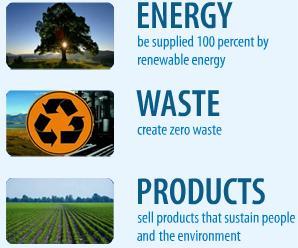
And the way it is going about achieving these BHAG’s is through:
- Sustainability Green Index: Understanding that 80% of the carbon footprint for a retailer like Walmart comes from upstream and downstream suppliers, which has led to development of Green Index scorecard and the carbon disclosure project that tracks and measures its humungous supplier base.
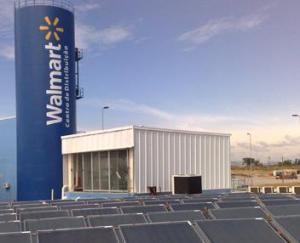
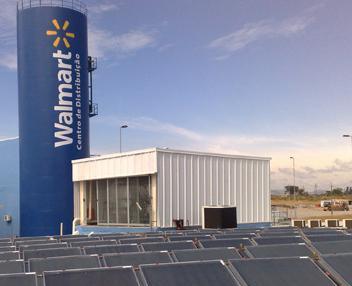
- Sustainable buildings & Renewable energy: Powering its stores to run on solar and wind energy. Replacing its lighting to the much less energy consuming LED’s.
- Working with critics and opening its doors to its enemies: Walmart has developed 14 different networks – like network of lumbar, network of fish, network on China etc., which includes NGO’s, governmental agencies and other stakeholders in a bottom-up fashion to better initiate sustainability strategies.
- Making sustainability sustainable in the business: Objective is to make Sustainability not as an add-on but something that lives in the everyday working of the business. This has resulted in Personal Sustainability Projects (PSP’s) for its employees like cycling or walking to work, exercise or planting a tree.
Walmart’s carbon footprint is still growing, but at a much slower rate than before – and it’s all transparent.
Being the number one company on the Fortune list calls for nothing less than perfection in all areas. Big players have immense influence and it becomes a moral responsibility for those players to lead the path along the whole value chain. Hurricane Katrina spurred Walmart on the Sustainability path. We don’t need another one to make other companies realize their shortcomings.
Other Green Companies:
2. Seventh Generation & Corporate Responsibility 2.0
3. SC Johnson – Industry defining Sustainable practices
4. Green companies – II-Patagonia
Walmart’s 2010 Sustainability Report @ http://walmartstores.com/sites/sustainabilityreport/2010/




 Linking Sustainability
Comments (moderated)