
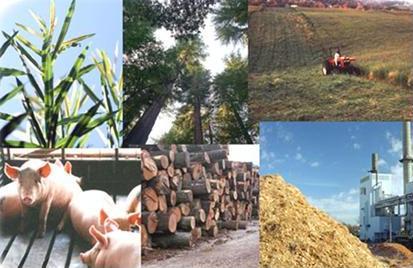
 Ethanol is one of the best smart bio-fuels we have today to fight air pollution from vehicles. The year 2009 was the record year for ethanol production to compensate its rising demand. In US and elsewhere, virtually every gallon of unleaded gasoline has some form of ethanol blended in it.
Any sugar-based raw material, primarily corn, can be converted into ethanol through a series of chemical processes. It contains 35% oxygen giving a more full combustion, which means lower tail pipe emissions. It is non-toxic, water soluble and quickly bio-degradable. It is a true renewable fuel source from plants that can be grown, literally in your backyard, thus greatly reducing the ‘addiction to oil’.
From an importer of ethanol, USA has become one of the major exporters of low-cost ethanol to countries like Brazil, Canada, Netherlands and even in OPEC Middle East region.
But then why isn’t ethanol taking wings? US Environmental Protection Agency (EPA) is against it. California Air Resources Board (CARB) is against it and so are other regulators around the world. Their take:
- Considering the true life cycle of ethanol, it is not an environment friendly fuel, no better than gasoline.
- It takes more energy to make ethanol than it produces.
- It uses precious croplands to grow corn, thus eating into the land used for food production, thereby, rising the food price and demand
- Scalability is an issue
- Land use is very high
- And, finally, the farmers in the developing countries burn down whole forests to plant more corn, thus speeding up the green house gas (GHG) emissions.
In a word, the ‘current form’ of ethanol, in the long run, is ‘unsustainable’. But ‘Growth Energy’ – a coalition of ethanol producers doesn’t think so. Their website http://www.growthenergy.org/ethanol-issues-policy/myths-about-ethanol/ shatters any myths that have been associated with ethanol.
Facts, according to ‘Growth Energy’ are that corn ethanol has reduced the GHG emissions by about 59% over petroleum. And cellulosic ethanol will bring that figure to 87%. And ethanol has positive net energy balance, which is in exact opposition to what the agencies think.
Many venture capitalists also think otherwise. Vinod Khosla, the venture capitalist, has long been an advocate of bio-fuels. He feels this industry needs a breakthrough, not incremental change. And major breakthroughs almost always come from small unknown companies. While they also realize these shortcomings, they feel it is the best possible solution today and are taking the current E10 to E15 type ethanol, not withstanding that government is upholding ethanol to much tougher standards than other green fuel options.
Many unknown Green Chemistry firms like Segetis and Reluceo are aggressively pursuing the next generation of ethanol – cellulosic ethanol, that doesn’t require any corn and all the issues related to it.
Japan initially took fierce strides in this direction. Ehime prefecture in Japan produces humungous amounts of tangerine juice. The local government has laid out plans to manufacture ethanol from tangerine juice residue. Another prefecture is looking at rice straw and husk, while still another is looking at waste. Carbohydrates in rice and bread make up major portion of the waste from supermarkets, restaurants, and hospitals. That waste gets converted into sugar, which converts into ethanol.
And none of these methods, from cellulose to tangerine juice residue eat into the food supply chain, thus making this second generation ethanol as a viable source of fuel in the future.
But it will all take time to take it to the scale the world needs. There can still be debates about ethanol’s ‘integrity’ towards environment. But one thing is a given: During the consumption/ running stage where more than 80% of CO2 emissions occur in gasoline vehicles, ethanol will bring it almost zero in one shot. And that is where its integrity lies.
Perhaps, a good start to move from dirty fuels, as many experts believe, would be a move to 20% nuclear, 20% solar, 20% wind, 20% bio- fuels (ethanol etc.) and 20% fossil fuel with carbon capture technology.
Sure. There is no one single magic bullet to fight emissions. We need to gather all the available technologies today to march into a sustainable future tomorrow.




 Linking Sustainability
Comments (moderated)